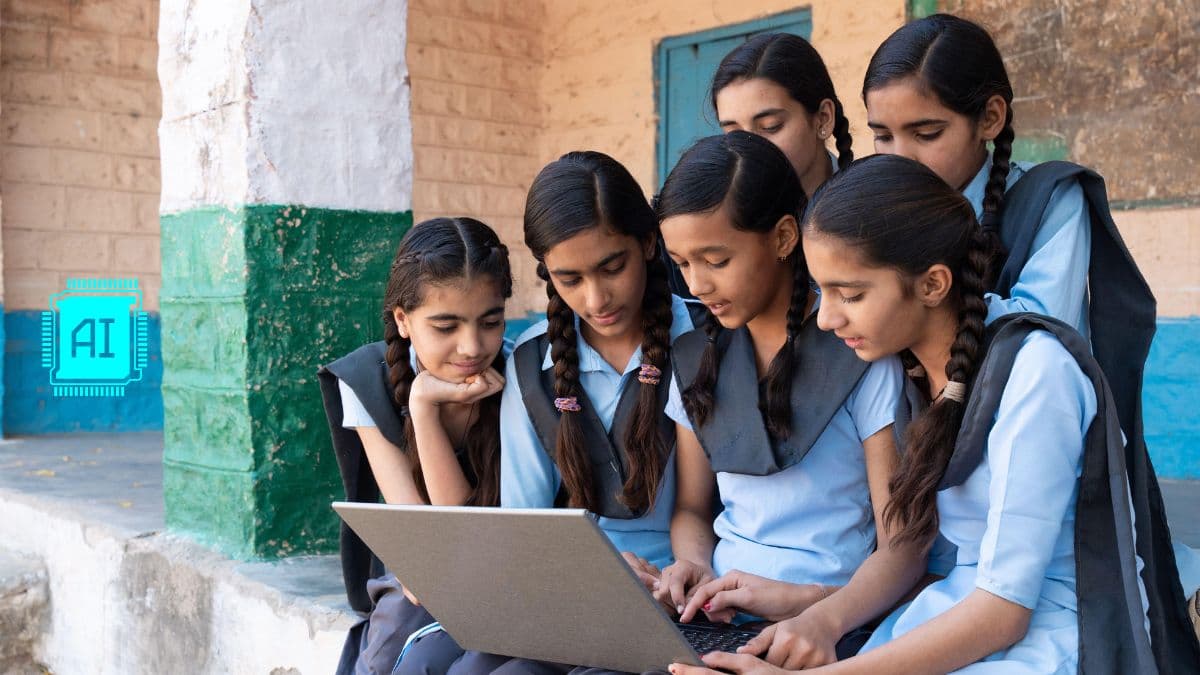
The Indian education system is currently experiencing a critical phase of transformation. Earlier, technology in schools largely meant knowing basic computer skills and surfing the internet. Today, it has become a crucial part of the very essence of education. Beginning with the 2026–27 academic year, the Central Board of Secondary Education (CBSE) has introduced Artificial Intelligence and Computational Thinking as a compulsory subject from Class 3 to 8, signalling that technology is a foundational element of education rather than an optional add-on.
However, the true value of implementing technology in school education goes beyond just teaching students how to use a chatbot or software. Schools of the future will be those that manage to create a holistic AI ecosystem. What is often seen today is the usage of different standalone technologies that operate without any meaningful integration between them. For instance, students learn their subject by using an app, while teachers depend on another tool for lesson planning and classroom management. This creates isolated digital systems, which limit the effectiveness of data collection and the learning experience. A comprehensive digital ecosystem, by contrast, involves integrating technology across all aspects of school operations, from administration and teaching support to student skill development.
The shift from generic tools to institutional intelligence
The limitation with generic AI systems is that they are more like answering machines, rather than learning partners. The moment when a student resorts to the help of an external AI to create an essay, the process of learning begins to diminish. In contrast, an integrated institutional ecosystem acts as a force multiplier rather than a one-dimensional solution, offering support across multiple functions instead of a single ready-made answer.
According to recent statistics from the Ministry of Education, India’s AI market is projected to grow 25–35% in 2027, and to support that growth, the country, which had an AI talent pool of about 600,000 – 650,000 in 2024, will need over 1.25 million AI professionals by the same year. To meet such demands, schools must go beyond looking at technology only as a separate entity and integrate it into the entire educational system in a manner that it acts as a tool that is able to respond to each child’s pace of learning and development, ensuring timely and effective intervention.
Empowering the teacher as the architect
The first myth about AI in education is that it will replace educators. In reality, there is a significant shortage of approximately one million qualified teachers in India, particularly in rural areas and in STEM subjects. This scenario clearly illustrates the significance of using technology not to replace humans but to enhance skills. The integrated platform automatically takes care of all the administrative tasks, which account for approximately 74% of educators' working time, allowing teachers to focus more on classroom instruction, mentoring, and student development.
If the processes of taking attendance, conducting tests and grading them, and making class schedules become automated, then teachers will have enough free time for doing what they can do best: inspire, motivate, and develop critical skills among children. This approach keeps technology in a supporting role, with teachers remaining at the centre of learning. It also enables educators to identify students’ needs well before end-of-term assessments.
Building a future-proof foundation
The government’s IndiaAI and Skilling for AI Readiness initiatives have laid the groundwork for a technology-aware workforce. However, “AI-ready” schools need not only curriculum updates but also to build ethical infrastructures that respect privacy, adopt policies regarding data and technology usage, train teachers on incorporating artificial intelligence into their pedagogy, and foster creative and reflective learning spaces for their students. The real opportunity for India’s education sector lies not in another standalone application, but in an integrated technology ecosystem that strengthens human creativity. Such an approach will help schools emerge as centres of innovation, preparing students for the economy of 2047.
The author is the co-founder and CEO of AI Ready School.
The opinions expressed in this article are those of the author and do not purport to reflect the opinions of views of THE WEEK